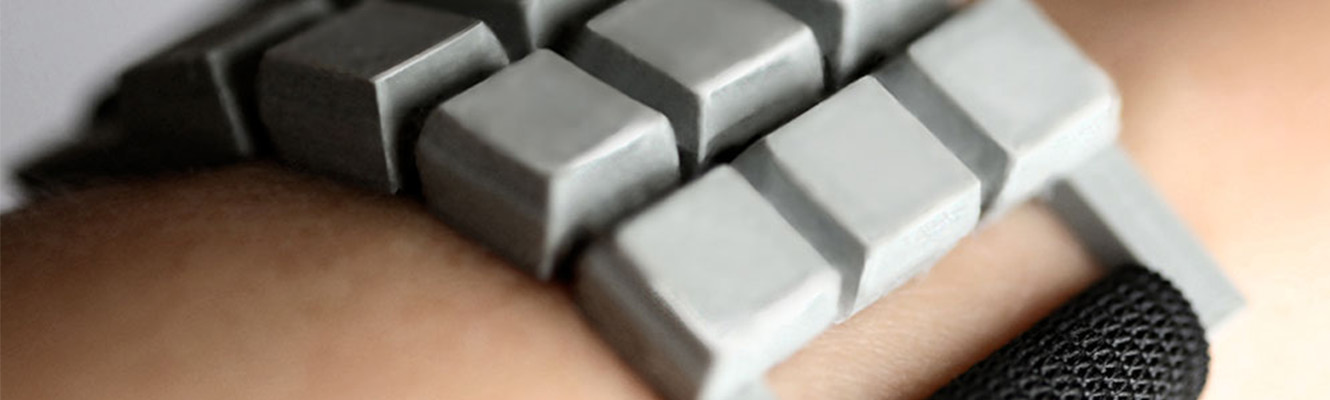

A device attachable to the forearm is one of the possibilities the team is exploring. Photo of a design model.World’s first medtech device for alcoholism developed in Finland
Aalto University researchers in Finland are developing a device that would be the world’s first medtech solution for alcoholism. The device’s touch to the skin stimulates neural pathways in parts of the brain closely connected with alcohol cravings and other addictions.
Aalto University researchers in Espoo, Finland, are developing a device that helps support sobriety in conjunction with other treatments, such as psychosocial treatments and pharmaceuticals.The new device is designed to suppress alcohol cravings through a pleasant touch to the skin that activates nerve pathways called C-tactiles. Through these, the stimulus reaches brain areas that are closely linked with alcohol cravings and other addictions.Juliana Harkki, the project’s medical officer, says the brain processes touch in the tactile cortex and soft stroking in the cerebellum.‘The parasympathetic nervous system is activated by gentle, pleasant touches, releasing dopamine and oxytocin, among other things. Touch also increases stress tolerance, and stress is a big trigger in alcoholism. The idea is not to replace intimacy with other people but to complement it by mechanically activating certain neural pathways,’ Harkki explains.Alcoholism causes enormous human suffering and economic costs. According to the WHO, alcohol causes around three million deaths every year. Globally, about three quarters of people with alcohol problems don’t get treatment, partly because of the stigma attached to it and also because of long waiting lists. Alcohol monitoring applications and support such as behavioural therapy are already available internationally.
The device we are developing would be the first technology-based medical solution.
‘The device we are developing would be the first technology-based medical solution,’ says Jukka Planman, the team’s commercialisation manager.The researchers hope to make the device available from pharmacies without a prescription. This will make it suitable for people who have already made the decision to get sober on their own. The device, which was developed in the hentoTouch project, is designed to be easy to wear discreetly under clothes.‘We are also looking at how often the activation needs to be done and in what dosage. It’s possible that the device doesn’t need to be carried around but could be used at home, for example,’ says Pauli Tuovinen, the team’s head of technology.
The device will also be tested e.g. for treating gambling addiction, as well as stress management.
The device will also be tested for treating similar conditions, such as a gambling addiction, as well as stress management. A patent application has been filed for the device.HentoTouch was initiated in 2021 by the NeuroBiodesign project. NeuroBiodesign is a neuro-focused innovation project jointly run by the Helsinki Brain & Mind network and Biodesign Finland program. The project has received Research to Business funding from Business Finland.HentoTouch team members from Aalto University: Pauli Tuovinen (from left), Juliana Harkki and Jukka Planman
Health Capital Helsinki