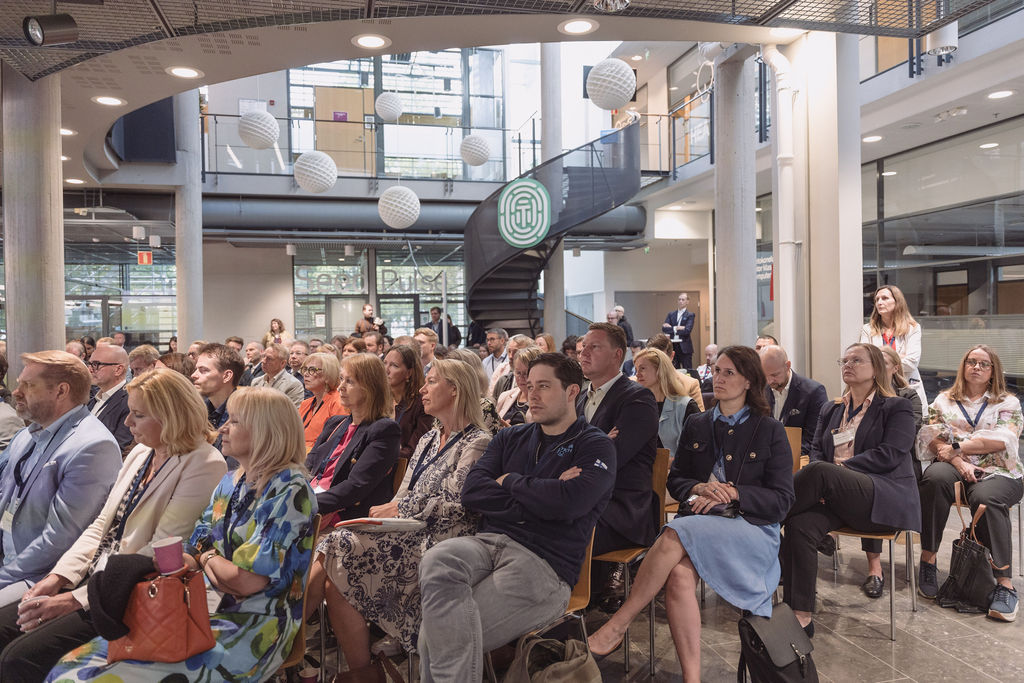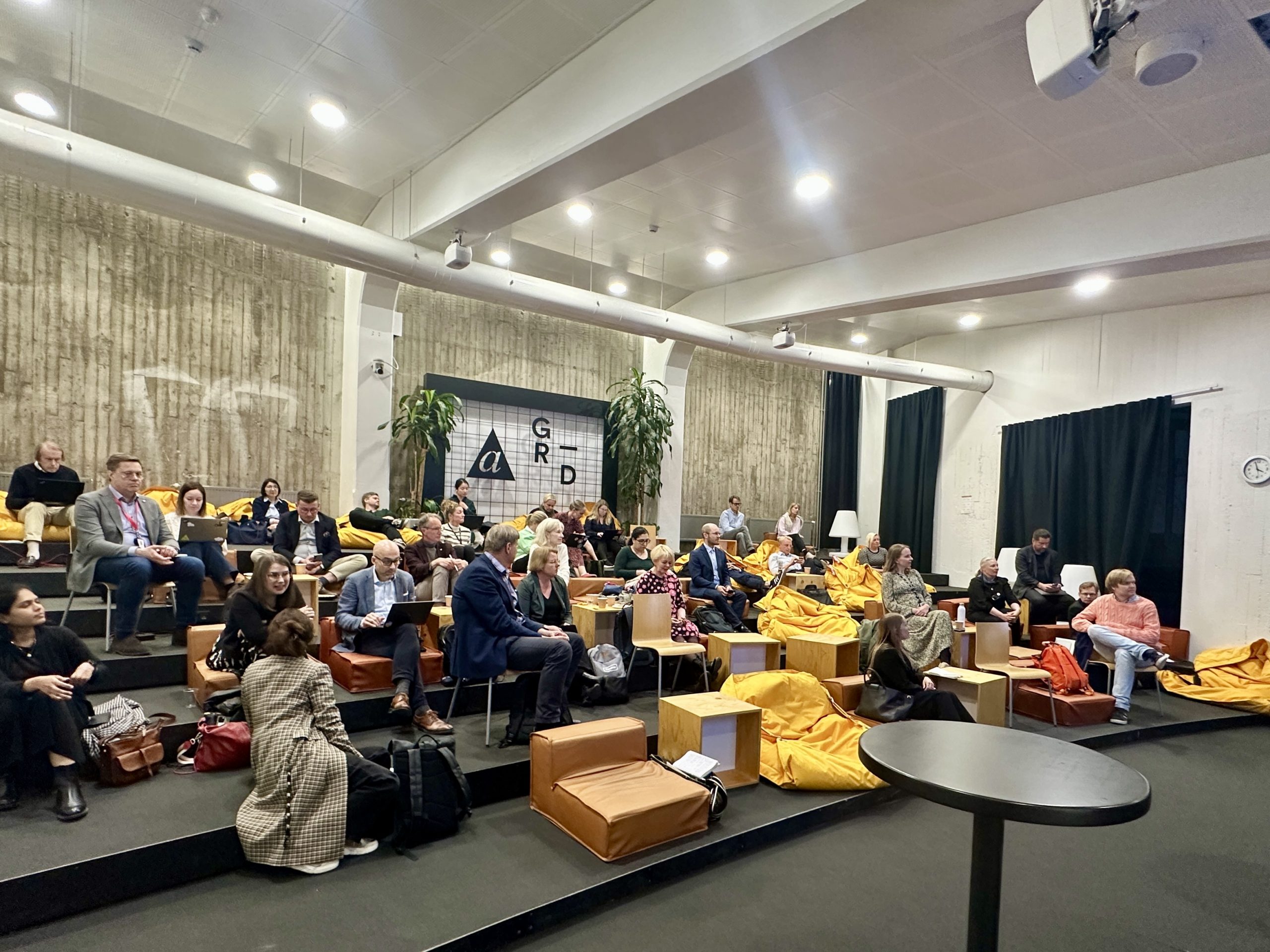

Bringing together research, industry and emerging technologies, Aalto University’s Health Capital Helsinki Ecosystem Insights event on 7 May 2026 highlighted how collaboration, mindset and multidisciplinary thinking are reshaping the future of healthcare. From needs-based innovation to quantum technologies and artificial intelligence, the message was clear: real impact requires more than technology, it demands ecosystems.
Jouko Lampinen, Dean at the Aalto School of Science, opened the event by welcoming participants and outlining Aalto’s mission: facilitating matchmaking and networking to enable multidisciplinary collaboration that leads to larger research initiatives and solutions to grand challenges.
At Aalto, research is not an isolated activity, but part of a broader ecosystem where students, researchers and industry partners collaborate closely. This multidisciplinary approach enables ideas to move more fluidly from early-stage research into practical applications and new ventures, with a strong focus on long-term societal impact.
Building networks that create value
The role of the Aalto Networking Platform was presented by Jussi Nissilä, who emphasized that value emerges from interconnected clusters and collaboration rather than isolated actors. The goal is to bring together expertise across domains and enable continuous knowledge exchange.
Susanna Jaarmo from Corporate Relations at Aalto University expanded on this by presenting Aalto’s corporate relations model, which is built on two complementary layers: strategic partners, forming long-term collaborations, and thematic partners, contributing to topic-specific initiatives.
Together, these networks support large-scale collaboration across industries and disciplines. As Jaarmo noted, research at Aalto is not about answering a single question, but about advancing broader knowledge through sustained cooperation. Students play a central role in this model, contributing to both research visibility and future talent pipelines.
From research to real-world solutions
The functioning of Aalto’s innovation ecosystem was described by Jarmo Ruohonen from Aalto Innovation Services, illustrating how research is translated into practical applications through startups, partnerships, and scalable solutions.
A key emphasis was on the human factor: innovation depends on individuals who are willing to take initiative and drive ideas forward. In this sense, building an innovation ecosystem is as much about culture as it is about infrastructure.
Starting from real needs
Otto Olavinen introduced the Biodesign Finland as a needs-based medical technology innovation and training program for professionals, supported by mentoring from experienced industry experts.
The main goal of the program is to develop need-driven, and research-based medical technologies that can improve healthcare globally.
Quantum technologies: small signals, big potential
Finland’s strong expertise in quantum technology was discussed by Pauliina Rajala, who introduced the perspective of Institute Q, and outlined the national quantum ecosystem. She highlighted Finland’s leading global position and the importance of cross-institutional collaboration.
Quantum technologies span three key areas: computing, sensing, and communication. While still emerging, these technologies are expected to open entirely new possibilities in healthcare and beyond.
Professor Lauri Parkkonen from Department of Neuroscience and Biomedical Engineering at Aalto University offered a concrete example through quantum sensing in brain research. Technologies such as magnetoencephalography (MEG) allow researchers to measure brain activity non-invasively, detect extremely small magnetic signals and identify early signs of neurological dysfunction.
Although not yet widely commercialised, these tools demonstrate how quantum technologies could significantly improve diagnostics and understanding of complex conditions.
AI already transforming healthcare
Artificial intelligence is rapidly becoming a key enabler in healthcare research. Associate Professor Pekka Marttinen from Department of Computer Science at Aalto University highlighted several application areas: computer vision in surgery, drug discovery using generative models to design molecules, analysis of electronic health records, and epidemiological modelling supporting public health decisions.
Despite this progress, a recurring challenge remains: data availability and integration. The ability to combine and utilize high-quality datasets is often the limiting factor in applying AI effectively.
Stronger collaboration for European AI
Mari Avikainen from ELLIS Institute Finland emphasized that advancing AI in Europe requires closer collaboration across countries and institutions. Fragmented efforts slow progress, while shared infrastructures and coordinated initiatives can accelerate both research and application.
To remain competitive globally, Europe needs to align resources, reduce barriers to data use, and strengthen cooperation between academia and industry.
A shared direction – ecosystems, not silos
Across all speakers and themes, a consistent message emerged. Innovation in health and well-being is no longer driven by individual breakthroughs alone, but by ecosystems that connect people, technologies and ideas.
Perhaps most importantly, several speakers highlighted that success depends on mindset. Technology can enable change – but it is people, culture and collaboration that ultimately make it happen.
At Aalto, the vision is clear. The future of health innovation will not be built in silos, but in ecosystems where research, industry and talent come together to turn ideas into action.