
Finnish health tech startups:
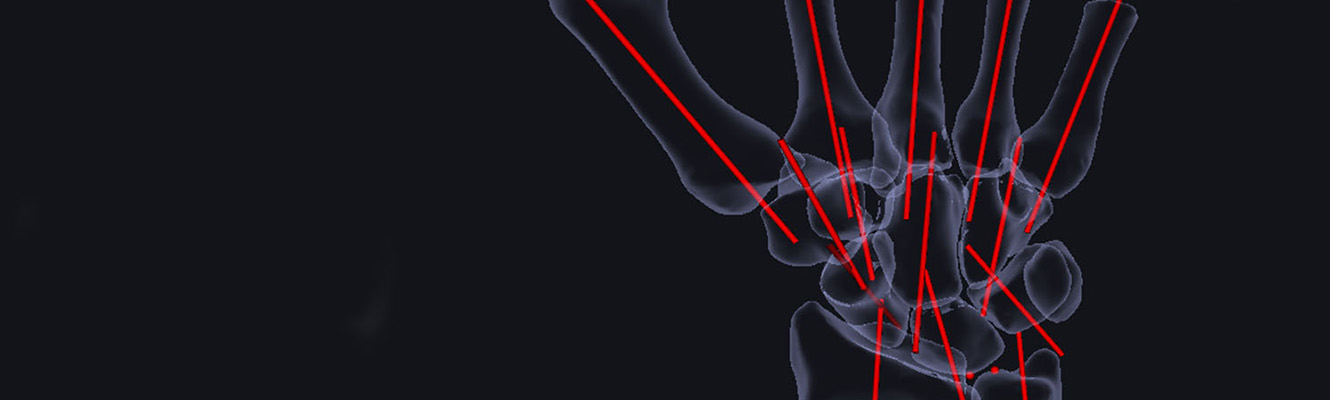
3D imaging is becoming a real multipurpose tool in healthcare. One of the hi-tech companies pushing the boundaries of 3D imaging is Disior that has developed 3D medical imaging software for clinicians.

Fast, objective, accurate
According to Henell, the use of Disior software yields three kinds of benefits. First of all, there is a 95% reduction in medical image processing times.“You can go from DICOM to 3D anatomical models and analytics in less than five minutes,” she promises. Second, clinicians are able to operate with a higher degree of certainty: Disior’s 3D anatomical analysis is developed around clinical landmarks and reference points that can be defined objectively with a high degree of repeatability.“Thirdly, you’re able to get better outcomes with our software, since 3D measurements can be used more accurately to diagnose and quickly plan the patients’ treatment.”In addition, the Disior software allows you to put together large-scale orthopaedic studies to improve understanding of pathological conditions and normal variation.
Nokia roots
Disior is founded on the belief that doctors should have the best possible tools to help them treat their patients, explains Henell.“That is the reason why we are bringing advanced medical imaging software to doctors’ everyday work,” she says.Henell points out that while introducing mathematical modeling into physicians’ clinical work at this scale may be a novel approach, it is nevertheless something that engineers have always done, using modelling to help with e.g. mechanics, motion and strength calculations.
Doctors should have the best possible tools to help them treat their patients.
The roots of Disior run to the 3D analytics expertise of the mobile phone giant Nokia in early 2010s. As new cell phone models were tested virtually, 3D imaging was a key tool at Nokia, with hundreds of people working with the technology. When Nokia’s mobile phone operations were sold to Microsoft, a lot of 3D imaging wizards were left wondering, if they should try to do something else with their considerable know-how.“Around 2016 we decided to re-purpose the software used in mobile phone development, after seeing the potential benefits it could have in medicine,” Henell looks back. “As for me, I always wanted to be a doctor growing up – and this way, I was able to get pretty close,” she laughs.In addition to Henell, there are three other founders: fellow ex-Nokian Sakari Soini and two medical industry veterans, Risto Kontio and Goncalo Barreto.
Anchored in science
Finally, Disior was launched in October 2016. In the years that followed, the startup worked together with medical doctors, researchers and professors to develop the tools which maximise the benefit of today’s 3D medical images – aiming for better diagnostics and treatment planning all the way.The first software (self-certified, Class I) came out in 2019, and the first CE marked software (Class II) came out in the summer 2020.“Meeting the regulatory demands takes time, but scientific validation is the corner stone of everything we do,” she says, adding that new software, targeting the needs of surgeons, will be launched in May 2021.
New software will be launched in May 2021.
Outsider smarts
According to Henell, with much of the team coming from outside the medical industry, it has been “a blessing and a curse” at the same time.“There’s been a lot of things that we’ve had to learn about the industry as everything is new to us. But since we don’t subscribe to any traditional way of thinking, we’re able to do things differently,” she sums up. Currently, there are over 20 people working for the company.Disior has been able to convince clinicians around the world about their product: medical industry hubs in Europe, USA and Asia are now paying attention to the innovation and its use keeps spreading.“We received approval of the U.S. Food and Drug Administration in February 2021,” she adds.

Disior Facts
Name: DisiorProduct: 3D medical imaging software for clinicians to get more tailored treatments.Founded: 2016Team size: 20Target customer/market: Medical professionals
Common ground
But what does Henell think about the Helsinki Metropolitan health ecosystem – has it been useful for Disior?She replies by saying that the significance of the local ecosystem has been – and continues to be – considerable from the point of view of the company’s success.“We have a very tight community in Helsinki, with everybody working together to make it big. We’re all friends here.”Watch the video with interviews of HUS Helsinki University Hospital clinicians and Anna-Maria Henell, CEO of DisiorText: Sami J. Anteroinen
Photos and video: DisiorBy Health Capital Helsinki