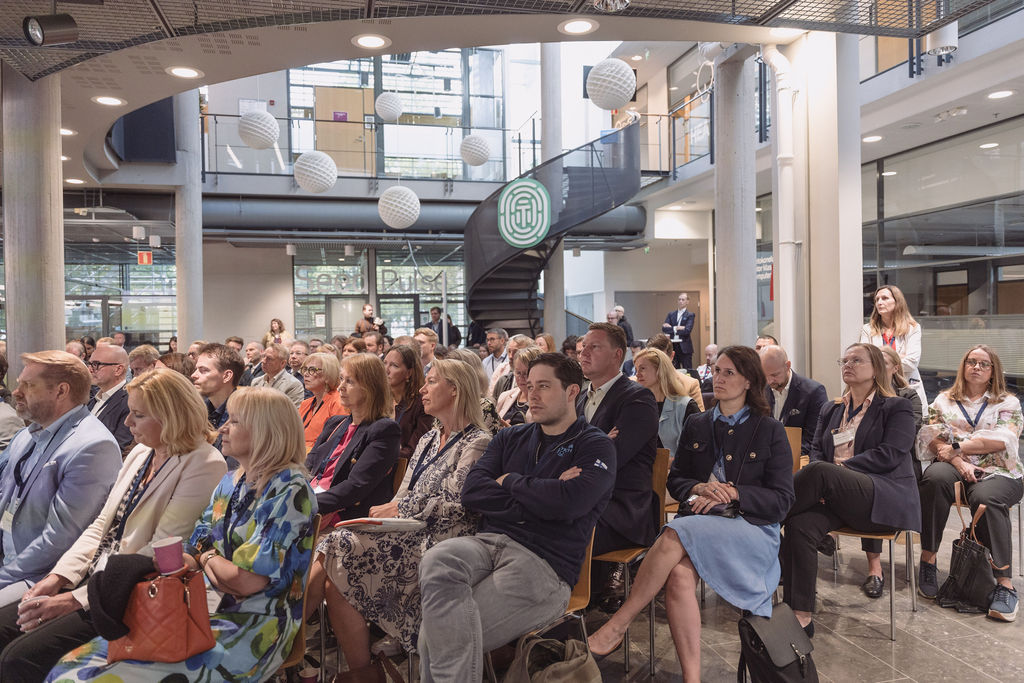

Photo: Some of Disior and Paragon 28 team members
Setting a new standard for foot & ankle care
US-based medical device company Paragon 28 acquired the Finnish startup Disior in January 2022. While being almost exclusively focused on the “hardware” side of foot and ankle orthopedic market, Paragon secured plenty of software savvy with one scoop. But what has the acquisition meant for the Finnish innovators of Disior?
Founded in 2016, the Helsinki-based Disior was a small three-dimensional analytics pre-operative planning software company, focused on complex foot and ankle anatomy. Now, Disior founder/CEO Anna-Maria Henell says, the company is so much more.“Originally, when we looked into the merger, we saw that it was very complementary in terms of competences and tech,” she says.“Previously, we had our own narrow slice of foot and ankle treatment, but with Paragon 28, the reach has grown tremendously. We now have all the steps.”
With Paragon 28, we now have all the steps in foot & ankle treatment.
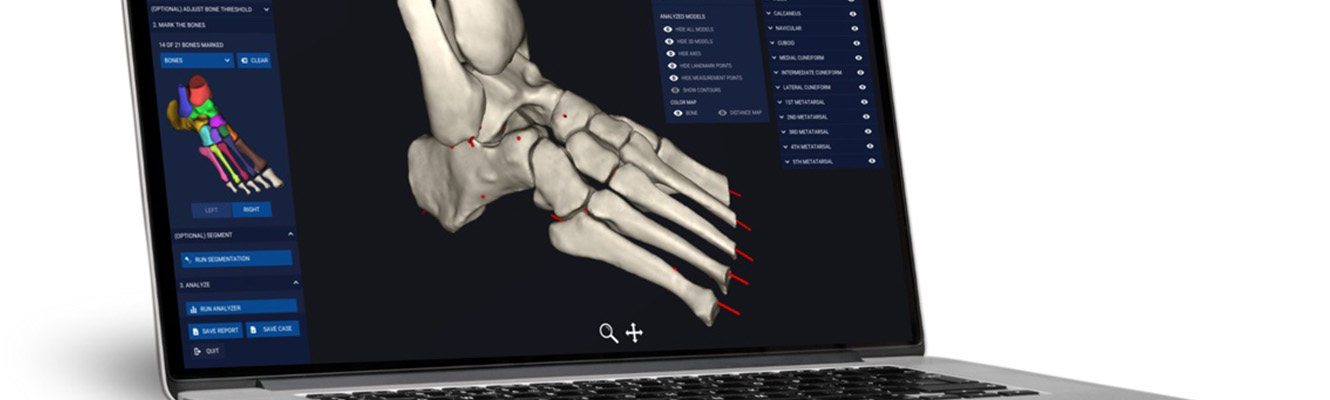
This means that, during the past 18 months or so, Disior has become an integral component to SMART 28™, Paragon’s ecosystem of enabling technologies for pre-operative planning, intra-operative support, and post-operative evaluation.Foot and ankle surgeons can now utilise Disior’s anatomy-specific surgical modules and get the objective data needed for the diagnosis and the creation of patient-specific surgical plans. Also, the assessment of patient outcomes will receive a welcome boost.
Reaping the benefits of the merger
The Finnish expertise came with a hefty price tag: Paragon paid 26 million dollars for the startup. Still, as 3D image analytics is a powerful trend in Health & Wellbeing, Paragon can be commended on a shrewd move.With the merger, operations within Disior have become more organised. Toni Piponius, Director of Enabling Technologies at Disior, says that the focus – in all the key issues out there – is better right now.“I feel that the acquisition and working with Paragon has given us structure that benefits also the creative aspects of the work,” Piponius comments.
Nokia 3D expertise for medtech use
Two of Disior’s founders, Anna-Maria Henell and Sakari Soini have a strong background in 3D imaging – just not from health tech. Both Nokia veterans, they’d been working with 3D simulation and analytics for a long time – but the fall of the once-mighty mobile phone maker meant that they were out of a job.“I always had a passion for medicine, so after I got laid off from Nokia, I thought about going to med school – and then realised I’m forty,” Henell recalls with a laugh.Instead, she sat down with a computer and gave the search engines a run for their money: where in the world of medicine could you benefit from the use of 3D?“Together with Sakari, we looked into everything from dental braces to hips and knees. After six months of hard work, we decided that Foot & Ankle was probably our best bet.”
We have about 30-50 hospitals as our customers, with over 10 US-based hospitals onboard, e.g. Cedars-Sinai in Los Angeles.
Perfect balance of technology and medicine
Gaining medical and surgical expertise from professors Gonçalo Barreto and Risto Kontio – who became founders as well – the new startup was launched in high spirits.“We thought then as we do now that it’s a good combination of technology and medicine,” Henell says.Early on, Disior managed to dazzle hospital decision-makers by showing them how its analytics software can get them reliable information from medical images in three-dimensions – in a fast and cost-effective manner.Using Disior’s solution, specialist clinicians have access to anatomy-specific modules and can tap into the objective data needed for diagnosis, treatment planning and assessment of treatment outcomes. With Paragon’s help, even more hospitals have heard about the Disior 3D magic.“Right now, we have about 30-50 hospitals as our customers, with over 10 US-based hospitals onboard. For example, Cedars-Sinai in Los Angeles is one of our customers.”
Growing team in Helsinki
With the Disior team now 20 people strong, there’s certainly an atmosphere of doing great things together. One of the newest recruits is Chelsea Henry, a Canadian native who started as Quality Manager in May 2023. She first heard about Disior at a diversity, equity & inclusion event at the Helsinki startup hub Maria 01 where Anna-Maria Henell was the keynote speaker, and was impressed by the company’s story:“Once I learned about how the company got started, I thought that this could be a really special place to work,” she looks back.“Disior is really good at figuring out, what are the real needs of the users – and that is a big priority for me, too.”Another team member deep in the customer interface is Kira Kuhlefelt who notes that when dealing with surgeons you have to take a very human problem-solving approach.“Startups tend to think it’s all about the tech, but in customer service business you need some amount of holding hands, too,” she says.
New product coming soon
With Paragon and Disior combining their talented R&D teams, a new standard of care to foot and ankle patients is about to emerge. At the end of 2023, a new product category will be launched, featuring a software & hardware combo.
At the end of 2023, a new product category will be launched.
“This shows our holistic improvement, opening up a totally new market for us,” promises Anna-Maria Henell.The Disior team is also very grateful to the entire Finnish Health & Wellbeing ecosystem for supporting their journey from day one.“For example, without HUS Helsinki University Hospital, we would never be here today,” says Henell.The ecosystem and its connections have been “simply vital” along the way.“It is easy to reach out and ask for help from somebody within that network – but you wouldn’t dream of trying to do that in the US,” she says.Read more:
Paragon 28 acquires Finnish 3D medical imaging company Disior for $18M
Finnish health tech startups: Disior is transforming 3D medical imaging
Text: Sami J. AnteroinenHealth Capital Helsinki