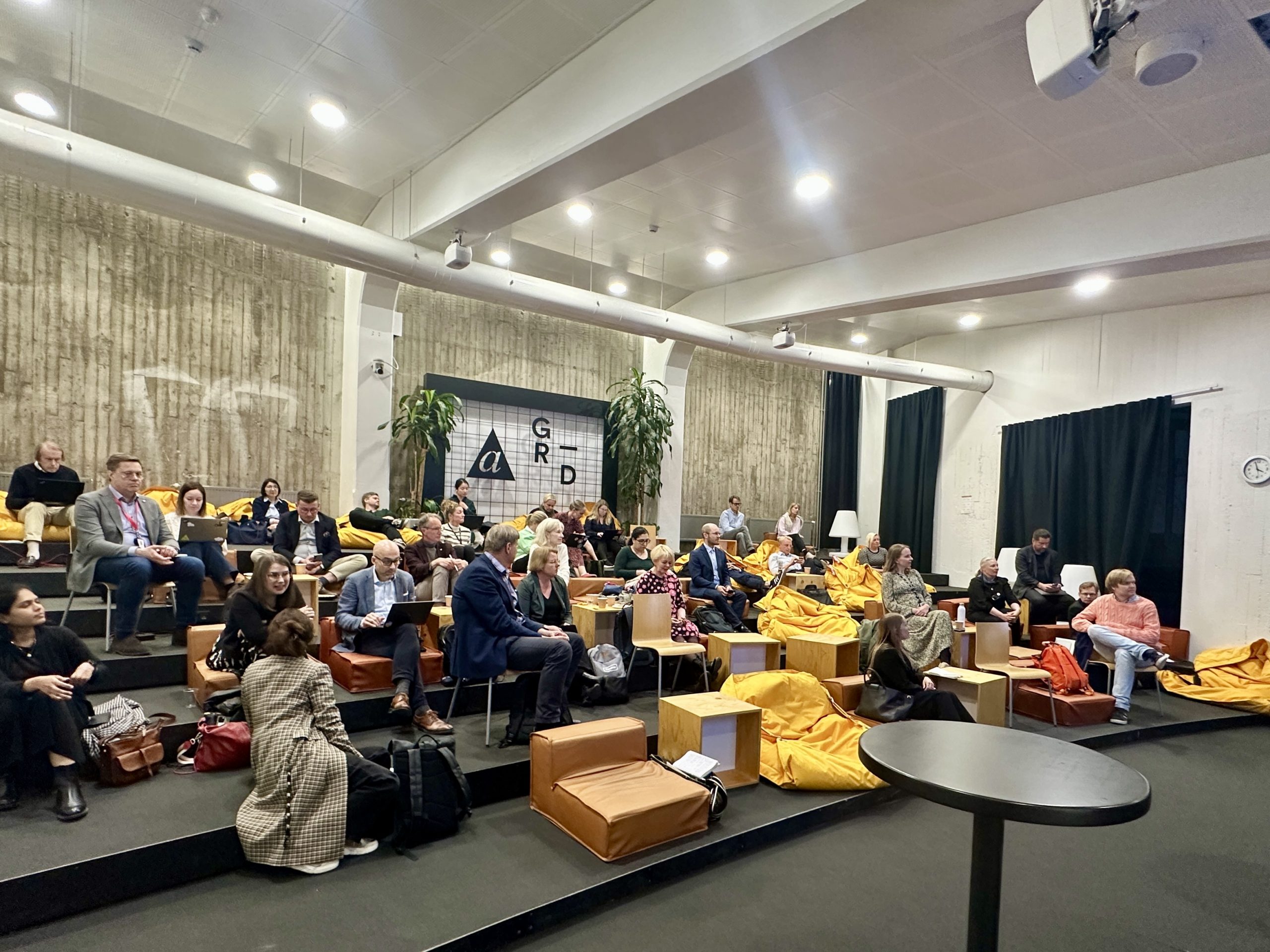

Representatives from seven hospitals in the Netherlands came to Finland for a deep dive into the health innovation work going on within the Helsinki Metropolitan health ecosystem. They were inspired to see the progress made in Finnish healthcare in the recent years.
Helsinki Metropolitan is committed to innovation in the healthcare sector.The region is home to a large pool of healthcare professionals and researchers, world-class universities, and a growing ecosystem of health-focused startups. Health Capital Helsinki promotes these attributes around the world, attracting investors, academics and other professionals to explore healthcare in Finland.This is how Helsinki came to the attention of Santeon, a group of seven hospitals from the Netherlands. Santeon addresses more than 10% of Holland’s healthcare market and employs some 36,000 people. The group is in the midst of an ambitious digital-transformation program aimed at solving some of the key challenges facing Dutch healthcare. As part of this learning journey, a group of 32 C-level representatives from Santeon’s seven hospitals visited Helsinki in March 2023 to see what Finland has to offer.“The demand for healthcare in the Netherlands is expected to increase by 30 to 40 percent over the next decade, yet the number of available healthcare workers is going down. We’re exploring how to close this gap through new technologies such as IoT sensors and home monitoring,” says Santeon Managing Director, Pieter de Bey.“We want to learn from leaders who have already taken steps towards transformation, innovation and digitalisation in healthcare. This is why we chose to visit Helsinki,” he says.
We want to learn from leaders who have already taken steps towards transformation and digitalisation in healthcare. This is why we chose to visit Helsinki.
Public and private sector health innovation
With the support of Health Capital Helsinki, the Santeon group organised a three-day program that included a visit to HUS Helsinki University Hospital, meetings with health companies and startups, and introductions to health innovation programmes Health Incubator Helsinki, SPARK Finland and Biodesign Finland.The main purpose of the hospital visit was to learn more about the digital Health Village, providing digital care pathways for different groups of patients. Finland’s university hospitals have developed more than 400 such pathways over the past decade, treating multiple-sclerosis, diabetes, stroke, breast cancer and more.”The healthcare system in Finland seems more holistic and integrated than the siloed system we have in the Netherlands, where hospitals, family doctors, mental-care institutions and home nurses operate separately. We’re looking for ways to integrate these different aspects of care, as it will be better for the patient,” says de Bey.“It’s inspiring to see the progress Finland has made over the last few years. We hope to learn from this success and apply it to our own system too. There’s a lot of reform going on in the Finnish healthcare system and I sincerely hope Finland will continue with its fast progression,” he says.Santeon delegation visiting HUS Helsinki University Hospital.One of the initiatives that made a big impression on the Santeon delegation is the health tech scale-up BeeHealthy, funded by private-healthcare provider Mehiläinen (founded in 1909).BeeHealthy is centred around a mobile app through which patients can access personalised health and wellbeing coaching. The app includes daily challenges, exercise programs, meal plans and mindfulness exercises. It’s all aimed at helping people to improve their lifestyle habits.“With Mehiläinen being the oldest private-healthcare provider in Finland, we were interested in how the company has adapted its traditional practices to the era of digital healthcare,” says Berend Buys Ballot, Innovation Manager at the OLVG Hospital in Amsterdam.“BeeHealthy was everything we expected and more. The user experience is wonderful for both patients and clinicians. It’s very impressive work.”
Finland is really one of the frontrunners in centralising patient data. There’s a strong focus on combining data platforms and data hubs.
“Finland is really one of the frontrunners in centralising patient data. There’s a strong focus on combining data platforms and data hubs. This is something we’re working on in the Netherlands too, so it’s interesting to see how it’s being done in Finland,” says Buys Ballot.
Showcase of digital health startups
The group also met with representatives from MedicubeX, a Helsinki-based startup developing an e-Health station where patients can self-measure their vital signs and disease risks. The booths can be placed in hospitals, offices, or even supermarkets, enabling patients to measure important information they would normally need a doctor’s visit for.Another Helsinki startup that demoed its work to the group is Vital Signs. The company produces a smart stethoscope for diagnosing respiratory diseases, using AI algorithms to analyse lung sounds and provide instant results for clinicians. Vital Signs aims to improve the accuracy and efficiency of respiratory-disease diagnosis and management.In addition, the Dutch delegation heard about the innovation by startups Lapsi Health, EpiHeart and Nosore, discussed about the Finnish public initiative to improve the availability of mental health services, and met with Reaktor Health, Helsinki-based consultancy for digital healthcare.Visit to Reaktor Health. Finally, no visit to Finland is complete without a walk in the forest. Guided by a Finnish wilderness expert in the Nuuksio National Park, the Santeon delegation had the opportunity to experience “forest bathing.” The practice involves immersing oneself in nature to clear the mind and think more positively.“It was inspiring to see how nature can play a role in promoting mental health,” says de Bey.”Overall we were very impressed with how much time and effort the Finnish hosts put into their presentations for us. They really tried to tailor their story to the Dutch situation and were genuinely interested in understanding how we do things there. The conversations were interactive and mutually beneficial,” he says.“We’re very grateful for the warmth and openness shown to our delegation. We hope to return the favour when our hosts visit us in the Netherlands.”
Health Capital Helsinki